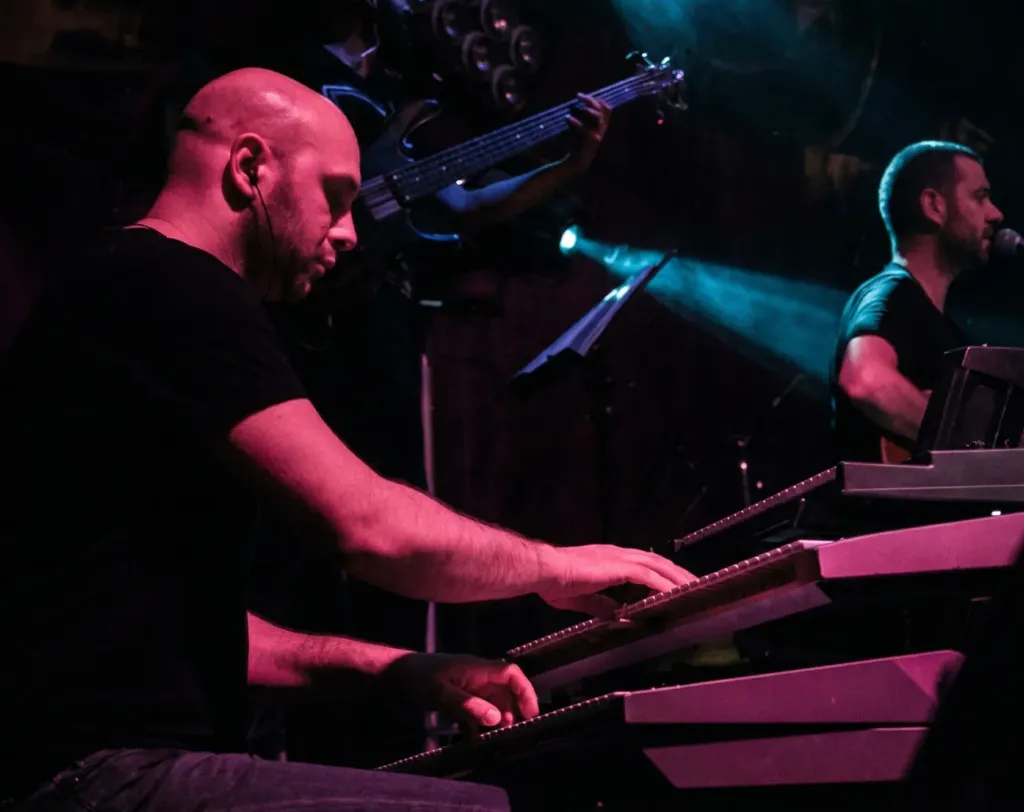
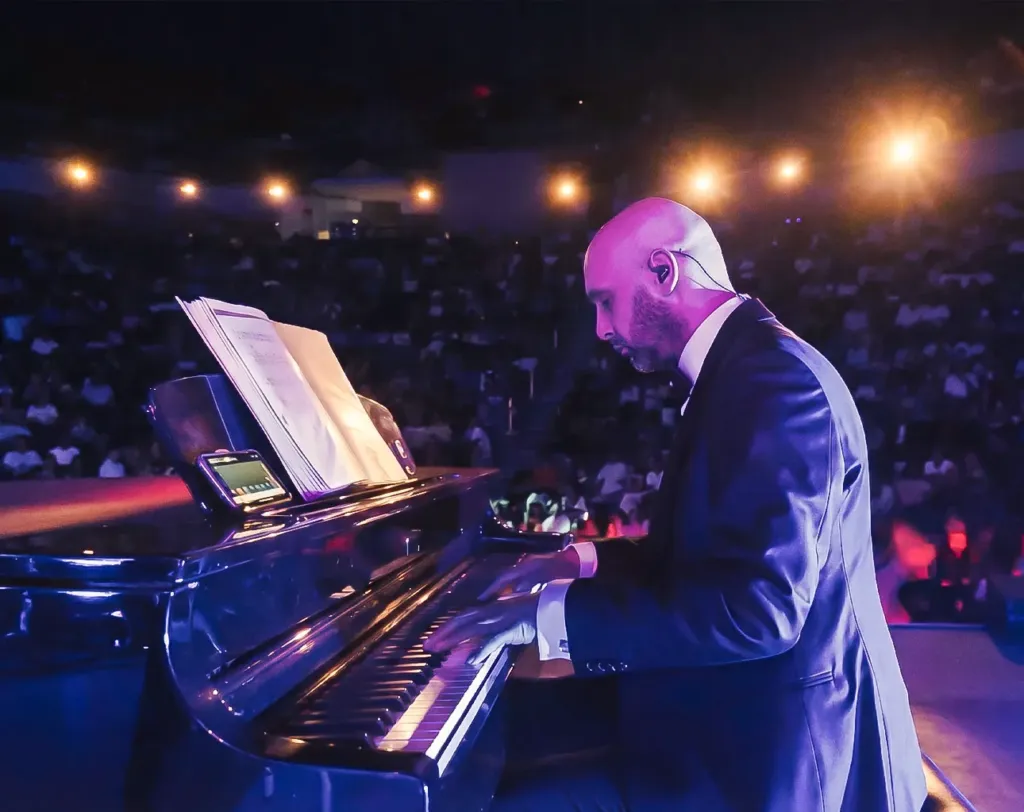
Can Ataç is a Turkish musician, songwriter, pianist, and musical director currently living in Dubai, United Arab Emirates. He is renowned for his work as a musician and arranger, particularly for his collaborations with the famous Turkish artist, Levent Yüksel. Ataç is a performer, composer, producer, and teacher.
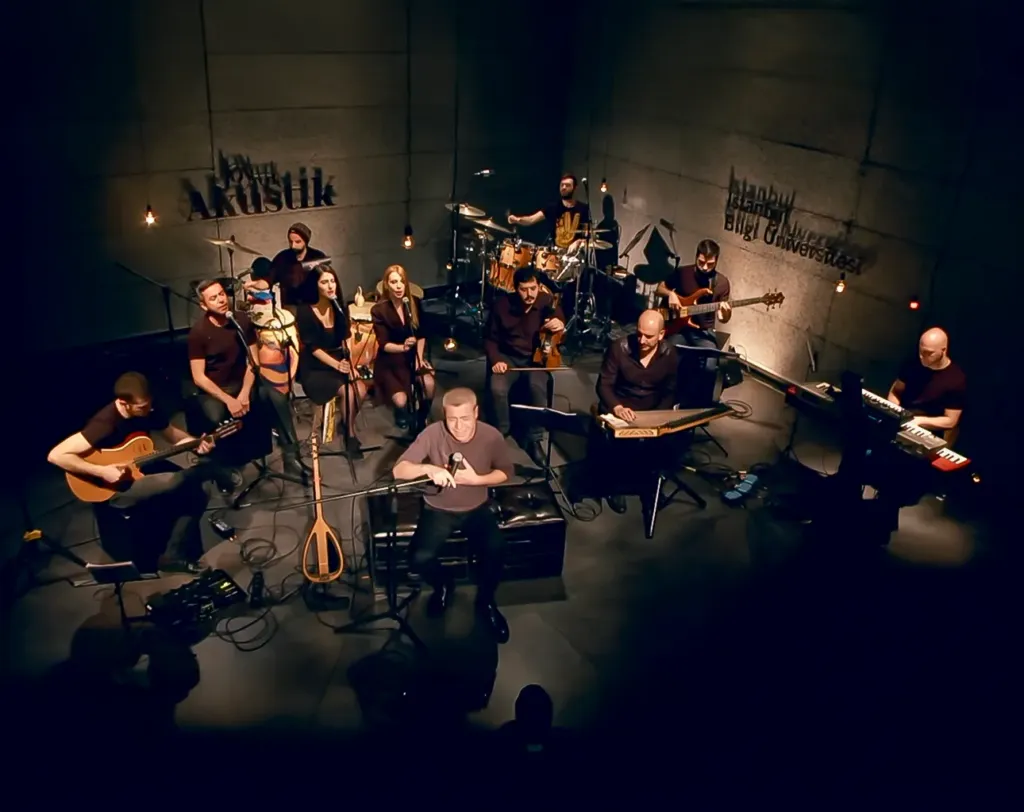
Both live shows and studio recordings have made him a household name. He merges Turkish pop with acoustic and orchestral music. Having been a member of the Levent Yüksel Orchestra, Ataç acquired experience in arrangement and ensemble direction. Currently, he remains active in the music industry, exploring both traditional and modern approaches.
Words Before Music
Can Ataç writes before he plays. Always has.
He sits at the piano only after the words have found their rhythm on the page.
“Music is structure, sharing, and reflection,” he said. “It is not only sound or emotion. It grows step by step, from silence to a single note, then into a complete piece.”
Writing comes first. Sound waits its turn. He tests every line aloud, listens for balance, and cuts what feels heavy. Some phrases fall away. A single vowel can throw the rhythm off, and he starts again.
His songs have a reserved nature. Concise words, consistent voice, guarded meaning. It’s contained, yet it doesn’t dominate. Songwriting isn’t a confession for him. It is a measurable, repeatable task. Suçlu proves it. The arrangement follows the words. They are deserved, and therefore meaningful.
“The piano starts nearly everything I write,” he said. It brings me both equilibrium and focus.
His compositions are minimalist and focused. When stripped down to piano and vocals, a song’s quality is evident.
Suçlu (2022) and Ben Tabi (2023) each conform to the same principle. The music’s strength came from the piano, though the production held it back. Ben Tabi’s acoustic rendition reappeared, carried by just his voice, the piano keys, and the vast, open space.
A Classical Foundation in Izmir
Can Ataç graduated from Dokuz Eylül University in İzmir in 2003. He departed the conservatory, the sounds of the piano still ringing in his ears, with a degree in piano and music education. The program shaped the way he thinks and works today.
“I studied music formally at Dokuz Eylül University,” he says, his voice carrying a hint of pride.“The training demanded daily practice, theory, ensemble sessions, and evaluation. I learned discipline during those years, and that structure still defines how I write and teach.“
Playing classical piano requires a systematic method, where each note is played correctly and repeated over and over. Following graduation, Ataç gave piano lessons at art schools and private music classes throughout Turkey. He taught students of all abilities and viewed teaching as a means to enhance his musical knowledge.
“I learned patience and really value the fundamentals from teaching,” he said.
Next up was the stage. He played in orchestras, wrote arrangements, and conducted long rehearsals that often ran late. The body gained stamina. The ear got the hang of balance. Music kept him grounded and gave him something to look forward to. The way things are organized has always determined his focus.

Years in the Orchestra
Her professional life grew, along with new opportunities. Keyboard parts supported singers, bands, and full orchestras. Listening became more valued than performance, which altered the musical landscape.
The collaboration with Turkish pop artist Levent Yüksel was a true turning point. Concerts required performers to be on point, with no room for error. You’ve gotta be tough to go touring.The role required presence without dominance.
“I worked as a pianist and arranger in his orchestra, joining him for many concerts and live projects in Turkey,” Ataç said. “I have also played with various other bands and artists across different forms, both on stage and in the studio.”
Years of performing have taught me a great deal. Music does not belong to the individual alone. Sound moves within a system. Systems require awareness.
The awareness remained.
Dubai: A Recent World
In pursuit of musical growth, Can Ataç moved to Dubai. New rhythms and new audiences came from the city’s variety. A change of pace encouraged introspection. Between projects, time moved more slowly, and listening grew.
“I moved to Dubai,” he said, “to find a new challenge and an international stage for my music.”
Live performance continued. The role of musical direction expanded. Orchestras sought his direction and trusted his judgment. Reinterpretation took the place of repetition.
“Here, I teach private piano and music lessons,“ he said. “I work with students at different levels, from beginners to professionals. There is a strong interest in learning both the technique and the logic behind it. Many people here want more than skills. They want to understand how music can support their lives.“
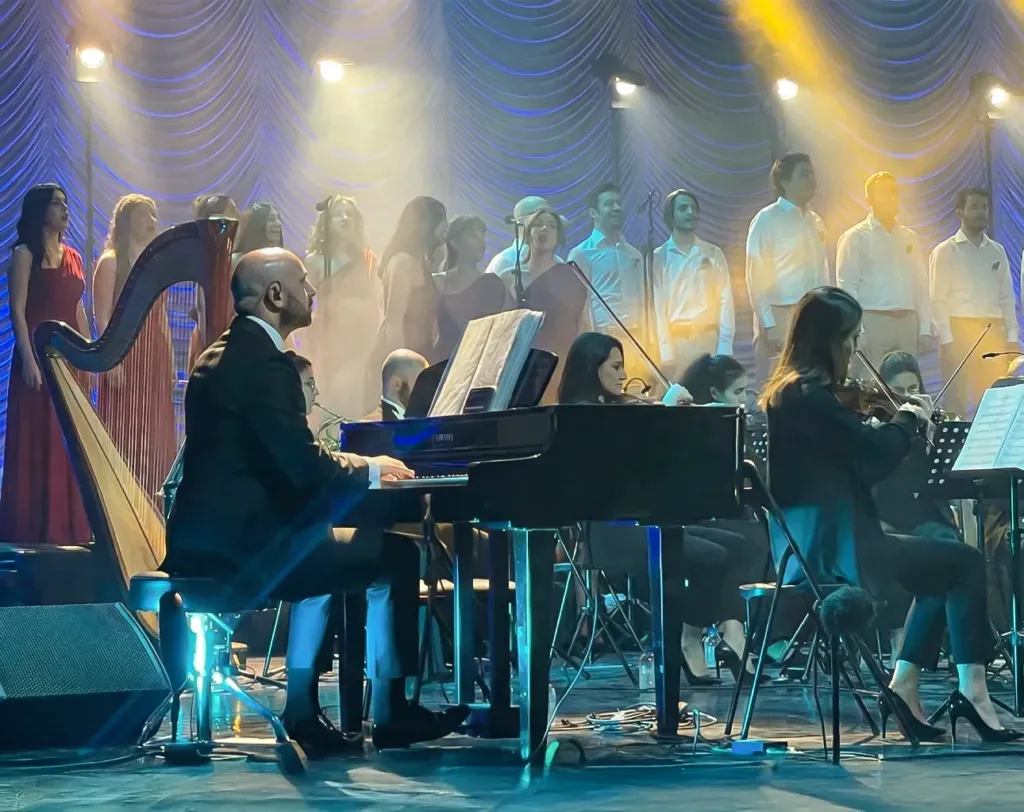
He collaborates with several orchestras and groups across Dubai. Ensembles, who need his insight during rehearsal and performance, often seek his experience in arrangement and direction.
“I sense real openness here,“ Ataç said. “Musicians want to explore new ideas, and audiences respond with curiosity. Dubai gives me a space where my background has value and where I can take part in a growing musical community.“
Composing for the Sacred: The Ilahi Method
Ataç’s ilahi (hymn) writing brings about a new order. Lyrics control all elements: form, timing, and melodic arc. He approaches the holy without fanfare.
Repetition matters. Restraint matters. The writer leaves their ego outside the room.
He describes memory, how each sound should bring the listener back to something ancient, vast, and silent. His ilahi neither explains nor guides. His ilahi reminds.
He composes for the Sufi tradition with the same discipline he uses in pop or ballad work. Nothing ornamental. A function exists for every interval.
“Writing ilahis and working in sound healing might look different on the surface, but for me,both come from the same source,” he said. Both begin with a form of listening that extends beyond hearing.
His newly written and composed hymn “Aziz Allah“ seems likely to be much talked about. You can listen to it on digital platforms.
Physical Awakening and Healing Through Music
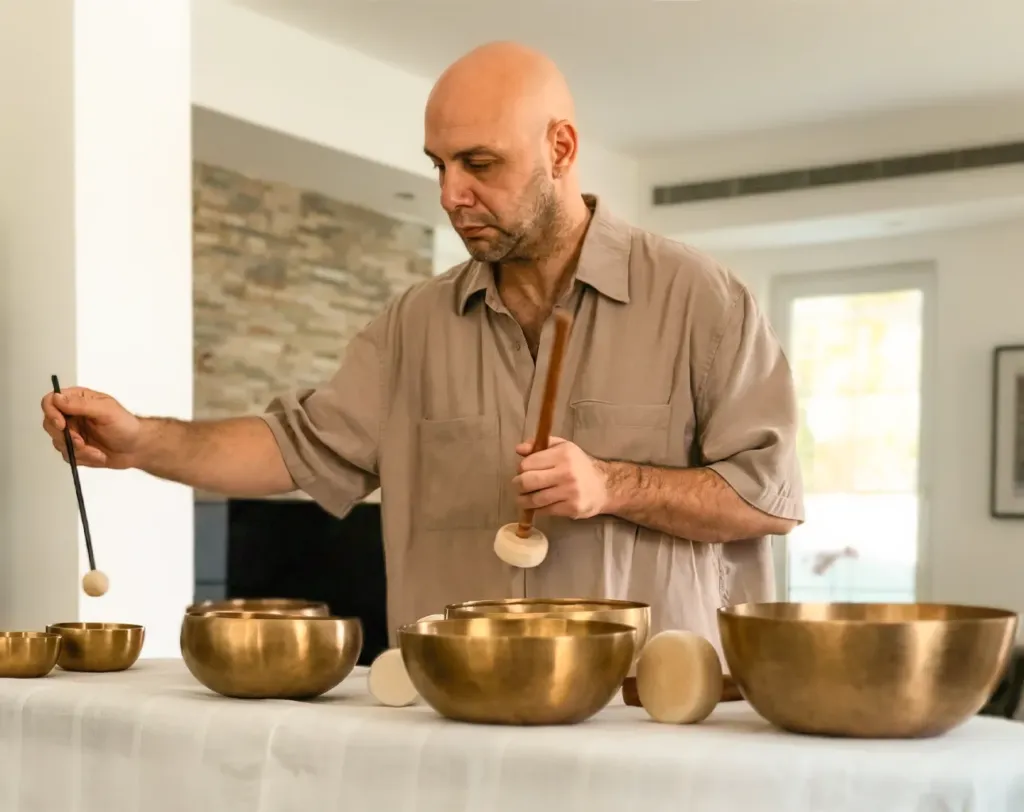
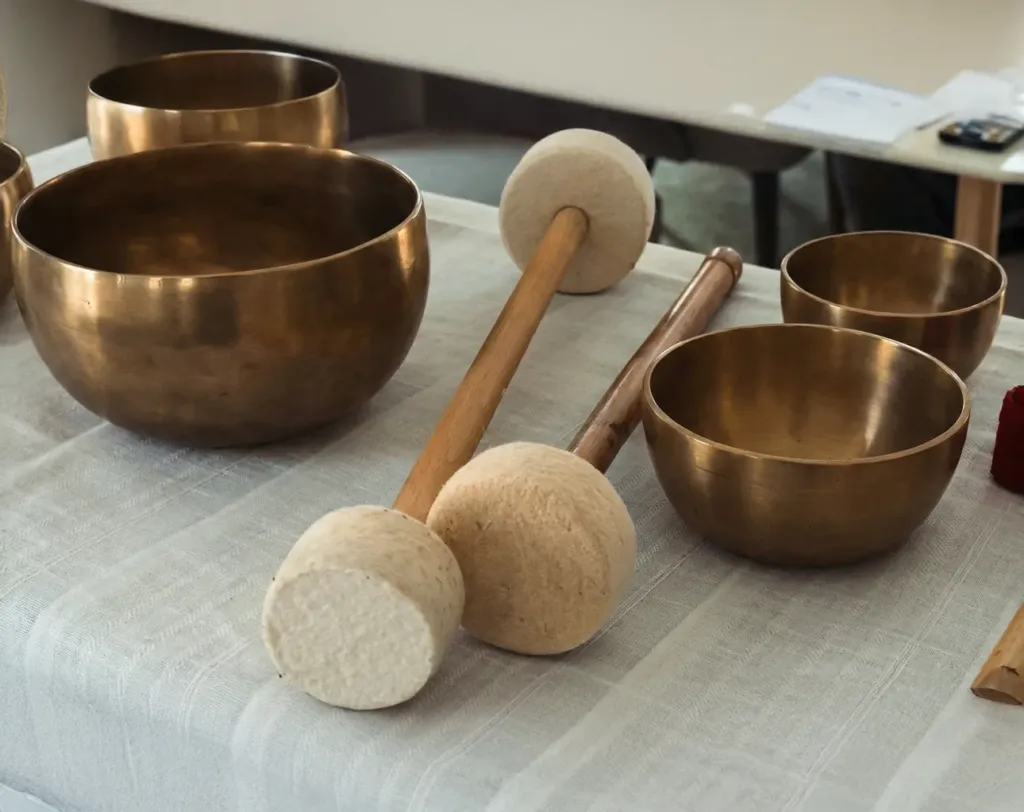
Ataç explains sound healing as the use of vibration to organize the body and mind. He structures every session like music: ordered, slow, and reactive. Metal singing bowls form the core of the healing sessions. Every bowl has a distinct tone and frequency. He sorts them by range, experiments with resonance, and starts with quiet.
According to Ataç, music is first physical, then spiritual. He interprets sound as a form of motion. Skin, bone, and tissue feel the vibration. For him, healing is in the feeling: slower breathing, relaxed muscles, and the body’s release of old tension.
No script. No trance.
After entering and noting the silence, he begins. Bowls chime individually, avoiding any contact.His approach is intentional, with a balance of strength and subtlety.
Sessions move slowly. He watches for a shift in breath, a drop in the shoulder, a change in gaze.
He never dismisses process mysticism. He references research upon inquiry. The body responds to vibration, which can alter heart rate and affect the nervous system.
Physics and patience, not a miracle.
Ataç mentioned sound healing isn’t the same as typical meditation or therapy. ”I see it as directly using the body’s reaction to vibration. We hear sound, but it also impacts skin, muscle, bone, and cellular water. Healing, in this context, means letting the system regulate itself. Sound creates the condition for this to happen. I trust the music and the science together; both point toward real, measurable change, not just for the mind, but for the whole body.”
Member of the Emirati Musicians Association
Ataç is a member of the Emirati Musicians Association. The group is composed of lyricists, composers, singers, instrumentalists, conductors, producers, educators, researchers, instrument makers, and critics. The goal is to provide support to musicians throughout the United Arab Emirates, including both residents and citizens. The association protects artistic and material rights, guarding the value of musical work. It supports the growth of artists’ skills and knowledge. By doing so, their contributions are kept in the country’s cultural landscape, letting their effect spread beyond the stage

Turkish–Arabic Collaborations and Social Projects
Ataç is in search of a sincere conversation connecting Turkish and Arabic music. He feels a sense of belonging in its rhythm and spirituality. Performance isn’t his only interest. He plans concerts with a social responsibility focus and joins projects with charitable organizations. The spiritual aspects of this work attract him. He thinks music can be a source of kindness and contemplation.
Working with local artists is still key for him: shared sound, shared intent, projects are sincere, not showy.

UAE Culture and the Ilahi Influence
Ataç’s compositional style has been changed by the United Arab Emirates. He was moved by its culture and acceptance, which influenced his hymn writing. That influence was the source from which Aziz Allah grew the piece. He’s inspired by his surroundings, languages, rhythms, and integrating faith into his routine. His writing is always calm and observant.

Instruction and Tutoring
Ataç offers private piano and music lessons in Dubai. His lessons feature technical accuracy and musical awareness. Students learn at their own pace, enhancing rhythm, coordination, and understanding.
“I teach piano as a full language,“ he said. “Notes, phrasing, and timing work together. Technique matters, but the goal is awareness, hearing what you play and understanding why it sounds that way.“
He instructs beginners, experienced students, and pros seeking improvement. Classes are structured around each student’s needs in separate sessions. He integrates classical and modern material for listening, sight-reading, and harmonic comprehension.
Students describe his lessons as practical and structured. All music is an act of rhythm, equilibrium, and concentration. Ataç supports students in developing their sound with discipline.He teaches how practicing music can teach you to focus and remain calm, while also improving your musical skills.
We are eagerly awaiting Ataç’s new projects.