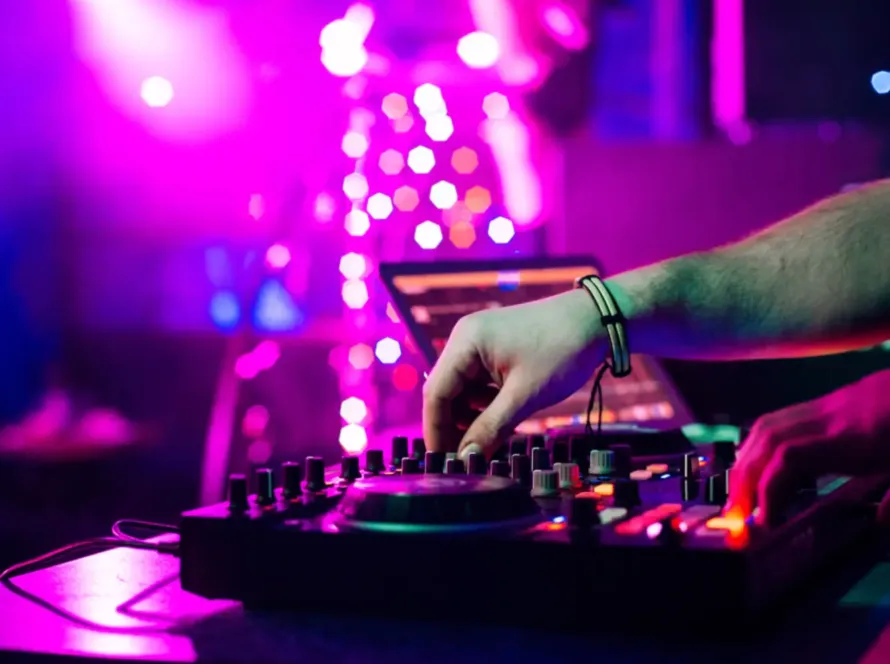
DJ practice feels very different once proper equipment is in place during the session. Home setups can help artists learn techniques, yet a professional DJ studio gives artists access to club-grade hardware, accurate audio, reliable connections, and sufficient technical support for rehearsal or set preparation.
For DJs in Dubai, studio rental also solves a practical issue. Club equipment can be expensive, and many artists prefer access to professional DJ equipment for select sessions. DJs can rehearse transitions, test USB libraries, prepare live sets, record mixes, and become familiar with equipment commonly found inside clubs or event venues.
Mystic Family works closely with DJs and live performers across Dubai. Good preparation matters to us because a DJ set begins well ahead of the event date. Equipment familiarity, audio checks, music organization, and rehearsal all influence the final performance.
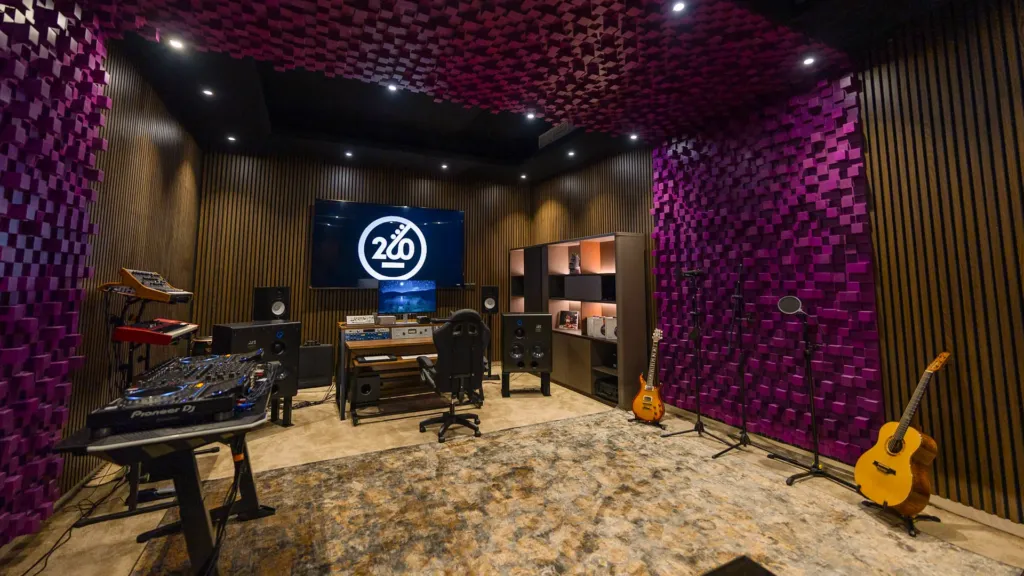
What You Should Find in a Professional DJ Studio
Professional DJ studio facilities should provide artists with a reliable place to rehearse, record, and prepare for real-world event setups.
The equipment needs to feel familiar to anyone who plays clubs, private events, festivals, weddings, or corporate parties. Professional decks, a capable DJ mixer, accurate studio monitors, headphones, audio interfaces, microphones, and dependable cabling form the core setup.
Space around the booth matters as well. DJs need easy access to USB ports, mixer controls, laptop connections, headphone outputs, and monitor level controls. Simple ergonomics save time during a session.
Good studios also keep equipment maintained and ready for use. Buttons respond properly. Jog wheels react as expected. Faders feel consistent. Audio connections remain stable. Small technical details matter once a DJ starts a long rehearsal.
Core Equipment Every DJ Studio Should Have
DJ studio equipment should cover three main needs: playback, audio control, and monitoring.
Playback comes from DJ decks, CDJs, or professional controllers. The mixer handles channel levels, EQ, effects, cue selection, and transitions. Studio monitors let the DJ hear the full output from an accurate position.
Headphones support track preparation and cue work. An audio interface helps route sound toward computers or record systems. Microphones support voice tests, event announcements, podcast elements, or live set additions.
Cables deserve attention too. RCA, XLR, USB, Ethernet, power connections, and adapters can determine how quickly a DJ setup becomes ready.
Simple hardware. Big difference.
Professional DJ Decks and CDJs
Professional DJ decks form the center of many studio setups.
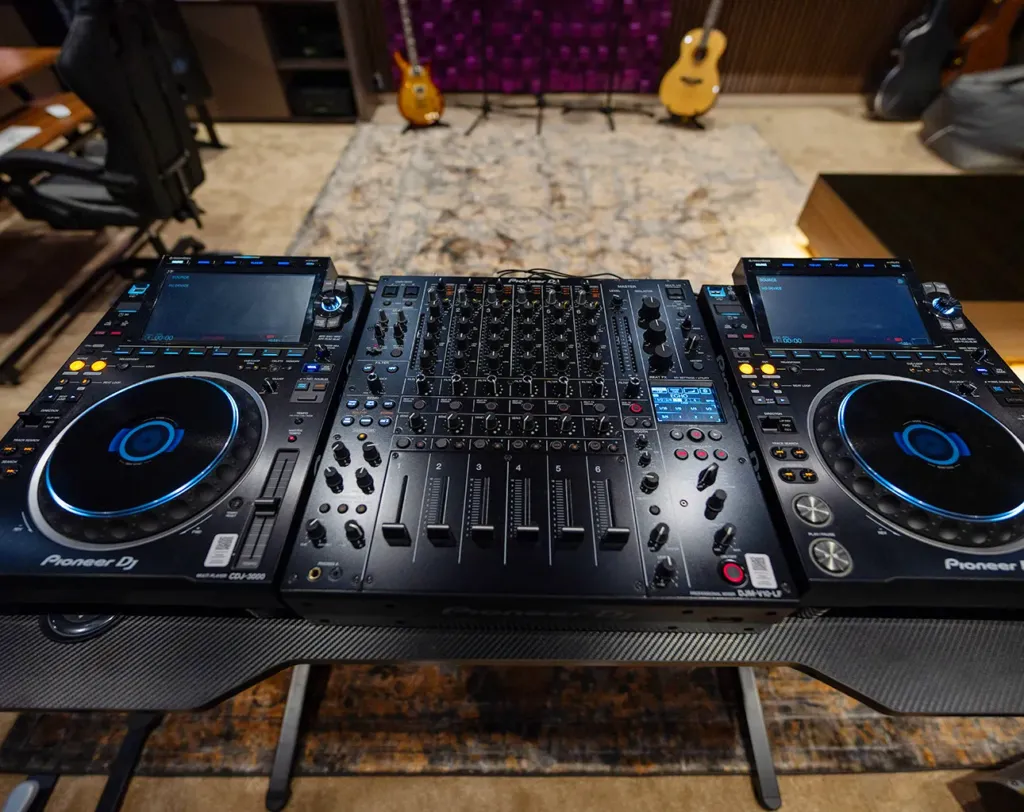
Pioneer DJ equipment remains familiar in clubs and event venues, so many DJs prefer to rehearse on CDJ units. CDJs allow artists to work directly from USB drives, browse playlists, read waveforms, set cue points, use loops, and control tempo.
A pair of professional decks gives DJs a realistic setup for club preparation. Three or four decks can support artists who use layered sets, acapellas, percussion tracks, or complex transitions.
Controller users may also benefit from a professional DJ controller setup. Software-based DJs can connect laptops and rehearse through platforms such as rekordbox, Serato DJ, or compatible systems.
Equipment choice should follow the artist’s real performance setup. A DJ who expects CDJs at an event gains far greater value from rehearsal on similar hardware.
DJ Mixers for Creative Transitions
The DJ mixer connects the whole setup.
Professional mixers give DJs control over channel volume, EQ, filters, headphone cues, effects, microphones, and master output. Club-oriented mixers often include several channels, which gives artists space for extra decks or external audio sources.
Fader response matters. EQ behavior matters. Effect controls matter.
DJs develop muscle memory through repeated use. Familiarity with mixer layout helps artists react faster during live sets because their hands already know the equipment.
Popular club mixers also allow DJs to rehearse effect combinations, filter transitions, vocal cuts, and track changes in conditions close to live event use.
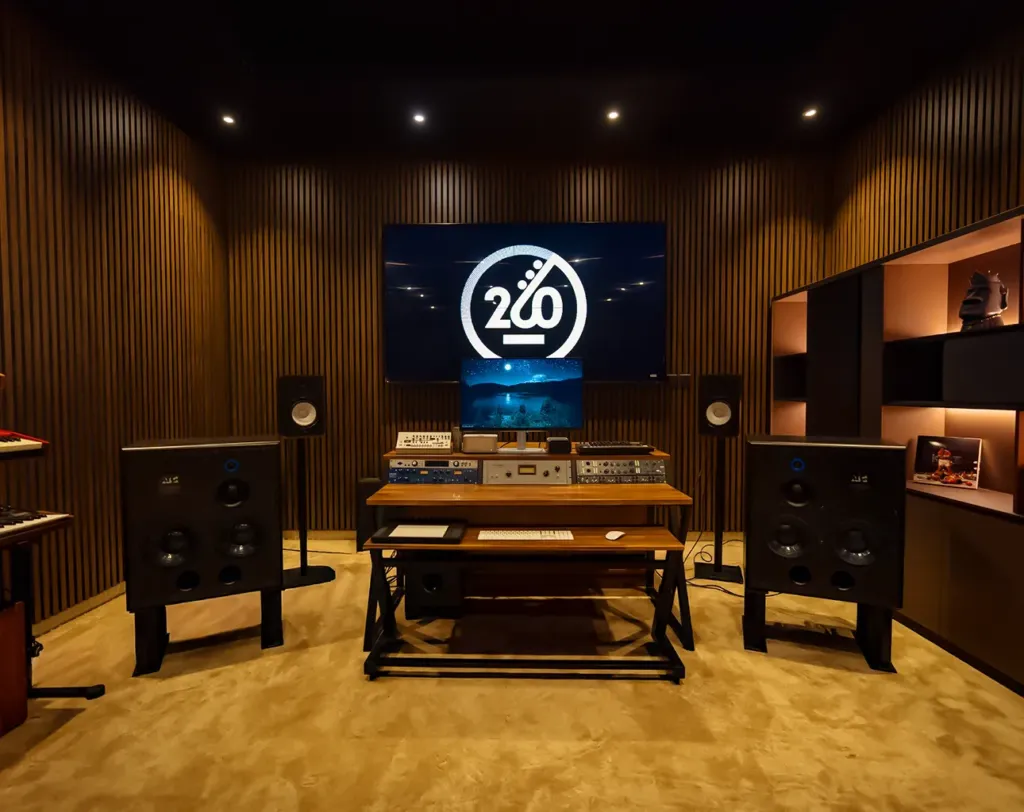
Studio Monitors for Accurate Sound
DJ monitors deserve far more attention than they usually get.
Headphones tell one part of the story. Studio speakers tell the rest.
Accurate DJ monitors help artists hear bass response, vocal balance, percussion, track levels, and transition differences. Strong low frequencies can easily hide mistakes through consumer speakers, while studio monitors expose changes in gain and EQ.
Speaker placement also affects what the DJ hears. Professional DJ studios position monitors near the booth so direct audio reaches the artist with minimal delay.
That setup matters during long practice sessions. DJs can hear how two tracks interact and adjust EQ based on real audio information.
Quality DJ Headphones for Cue Control
DJ headphones handle one very specific job: cue control.
The DJ listens to the next track, checks its beat, finds the right entry point, and compares it against the master output. Reliable headphones make this process easier.
Good DJ headphones offer strong isolation, clear low-frequency response, comfortable ear cups, and sufficient volume for loud environments. Rotating ear cups can help DJs who prefer single-ear cue work.
Studios can provide headphones, while many professional DJs prefer their personal pair. Personal headphones already feel familiar around the head and ears.
Either route works. Reliable headphone output from the mixer remains the key requirement.
Audio Interfaces and Recording Equipment
DJ recording equipment gives practice sessions another purpose.
Artists can record full sets and listen later. That playback helps identify level changes, rushed transitions, long sections, weak track order, or awkward effect use.
An audio interface can route mixer output into a computer or digital recorder. Studios may also use dedicated record units for direct set files.
Recording a rehearsal offers huge value. Memory can be generous after a good session. The recorded file gives a far more accurate account.
DJs preparing promotional mixes, radio submissions, private event previews, or audition material can also use a DJ recording studio for finished audio files.
Microphones and Useful DJ Accessories
Microphones matter for DJs who speak during events, host sections, introduce performers, or work beside vocalists.
Corporate parties, weddings, gala dinners, and private celebrations often require the use of microphones. Rehearsal gives DJs a chance to set microphone gain, test voice volume, and practice transitions between music and announcements.
Useful accessories can include USB hubs, laptop platforms, spare audio cables, power extensions, adapters, phone connections, memory card readers, and device chargers.
Small items can rescue a session. Anyone who has arrived with the wrong cable understands the pain.
Why Club-Grade DJ Equipment Matters
Club-grade DJ equipment helps artists rehearse in conditions close to real professional use.
A DJ who primarily uses compact home hardware may find a large professional mixer or CDJ setup unfamiliar during an event. Rehearsal closes that gap.
Button placement becomes familiar. Cue controls become natural. Library navigation feels quicker. Mixer levels become easier to manage.
Professional equipment also supports artists who need several audio sources. Live musicians may join the set. A saxophonist, percussionist, vocalist, or violinist can require additional audio routing.
A hybrid live DJ performance needs proper preparation, especially when music and live instruments share the same sound system.
Equipment for a Professional DJ Set Record
A professional DJ’s set record needs a reliable signal flow.
The basic chain usually includes a DJ deck or controller, a mixer, studio monitors, headphones, an audio interface or recorder, computer software, and the correct cables.
Track files should also use a suitable audio quality. USB libraries need clear organization. Cue points and playlists help save time during the session.
Artists who plan a one-hour promotional set can rehearse the track sequence first, then record a clean version once the order feels right.
Preparation pays off here. One rehearsal can save several repeated takes.
What to Check Prior to a DJ Studio Booking
Start with the equipment list.
Ask which decks, mixer, monitors, audio interface, and software are available. Confirm controller compatibility if you plan to use personal hardware. Check available computer connections and USB formats.
Next, ask if set recording forms part of the session. Artists who need audio files should be familiar with the available file formats and transfer methods.
Session length matters too. One hour can work for equipment practice. Two or three hours give enough space for a full rehearsal, playlist edits, and a recorded set.
Artists who plan hybrid event entertainment should share live musician requirements early. Saxophone, violin, percussion, or vocals may require microphones, extra channels, or additional audio routing.
How Professional DJ Studios Prepare You for Live Performances
DJ rehearsal studios give artists repetition.
Repetition creates familiarity. Familiarity creates calm.
A DJ can test an opening sequence several times, rehearse a difficult transition, compare track combinations, practice microphone work, and prepare an event finale. Technical decisions become easier once they receive proper rehearsal time.
Professional DJ practice also helps artists prepare for unexpected changes during live events. Guest requests, schedule delays, extended dinner periods, or early dance-floor energy can alter the original set plan.
Strong preparation gives the DJ several musical routes instead of one rigid playlist.
Choosing the Right DJ Studio in Dubai
DJ studio rental Dubai options can vary widely, so equipment should remain one of the first points to review.
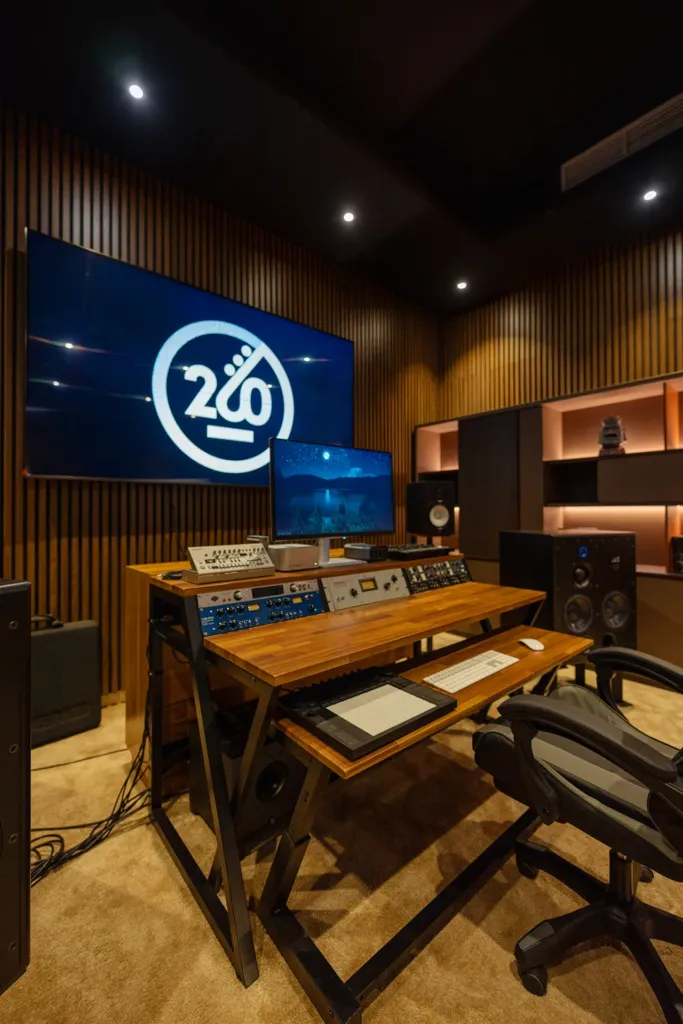
Look for professional DJ equipment, reliable monitors, comfortable booth access, recording capability, and enough session time for your purpose. DJs who prepare for club dates should prioritize club-grade decks and mixers. Private event DJs may also need microphone practice and flexible audio inputs.
Mystic Family understands DJ preparation as part of live entertainment. Our work connects DJs with musicians, performers, choreographers, and event production, so rehearsal has a practical purpose: the artist arrives ready for the real event.
A DJ studio should give you time to test ideas, learn the equipment, hear your set properly, and prepare for the venue ahead.
Then the music can do its job.