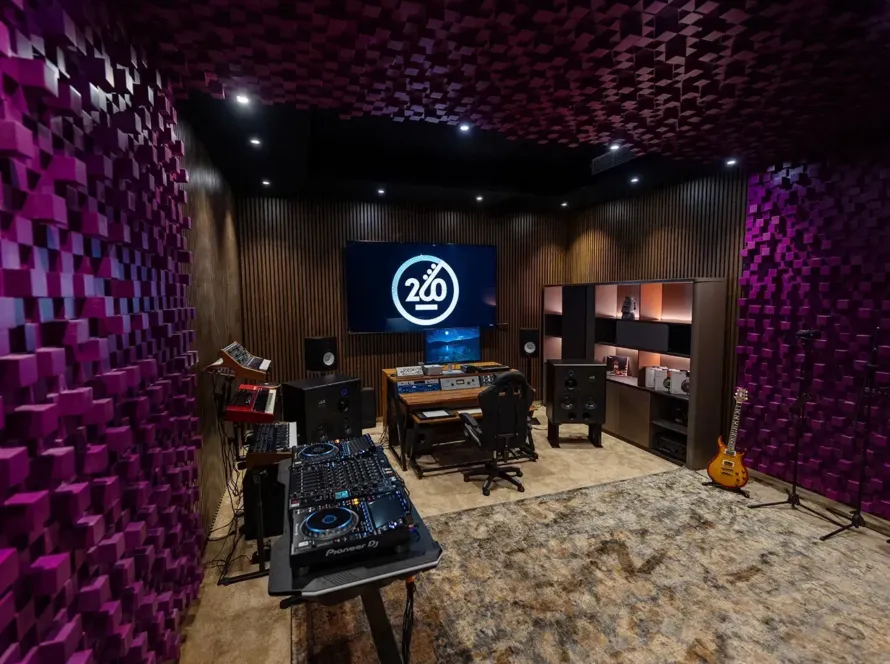
Bass phrases and sustained chords require different articulation from a synthesizer, even when both belong to the same electronic track. For analog synthesizer music production, the useful starting point is the part you want to play. On Moog’s Sub 37, monophonic operation expands to a two-note Duo mode. Six-voice polyphony in Sequential’s Prophet-6 lets a performer play chords whose notes have separate voice circuits.
Studio 260’s published inventory lists both instruments within Mystic Family’s music production facilities in Dubai, alongside digital tools for arranging and recording their output. For a repeated bass figure, the envelope’s attack and release determine how the sound begins and ends. Compare the recorded phrase with the vocal to hear any overlap at each bass note’s ending.
Write the Part Around Its Musical Role
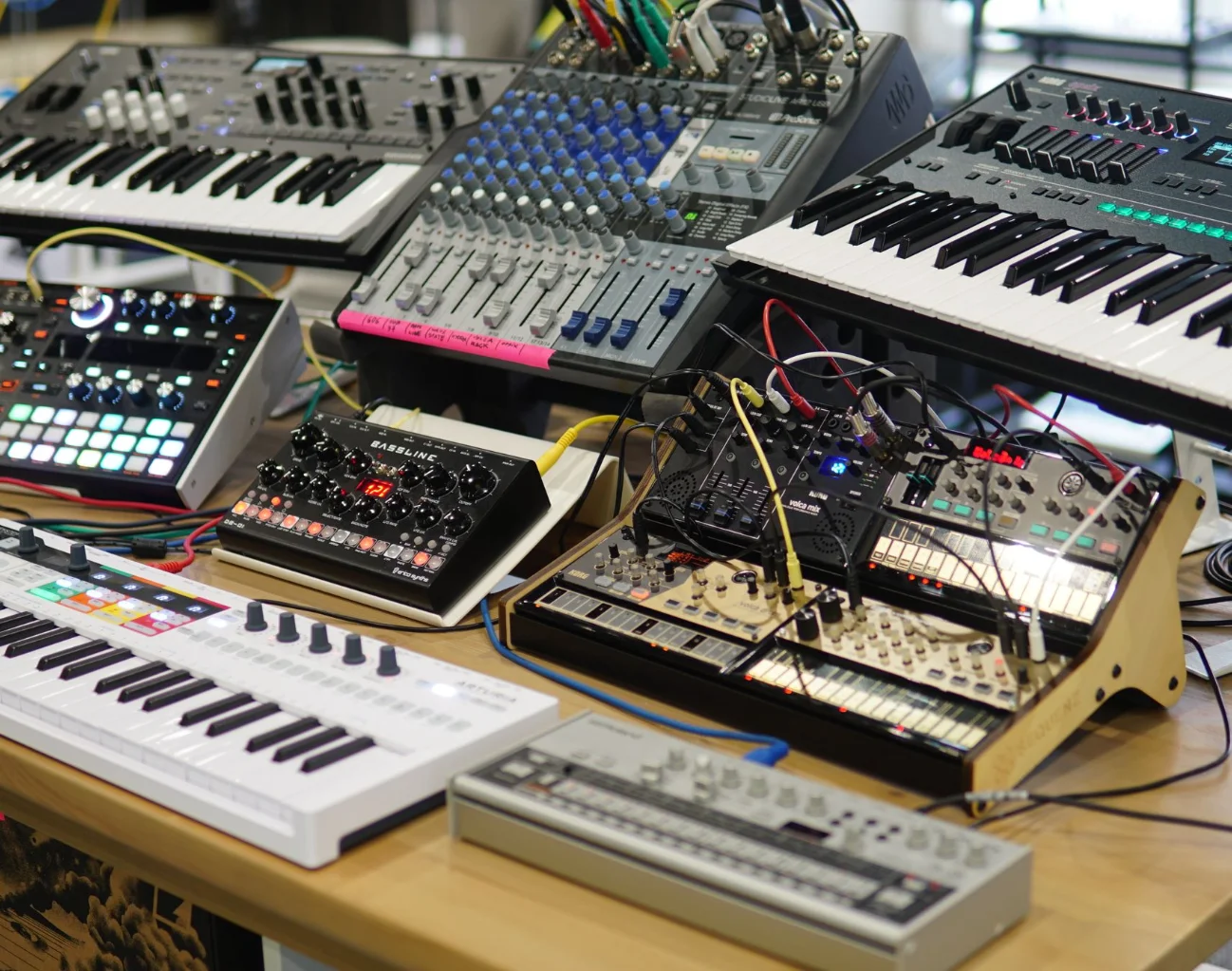
For a bass part that follows the kick drum, note length deserves as much attention as the initial sound selected on the instrument. Short notes leave space between phrases. If a sustained note crosses the next drum hit, the producer needs to hear that overlap during playback. The same melody played an octave higher changes its relationship with the vocal, so register belongs in the arrangement discussion.
Chord parts introduce a separate decision concerning the number of notes that must sound together during the phrase. On the Prophet-6, six voices allow a six-note chord, though sustained releases use voices until they finish or another note replaces them. When the arrangement feels crowded, a simpler voicing often provides a more useful revision than adding another recorded layer.
Understand the Sub 37 Duo Mode
Moog’s Sub 37 manual describes Duo mode as paraphonic operation, in which the two main oscillators can play separate pitches through a shared signal path. The filter and output stage remain common to both pitches. When the performer adjusts the shared filter during a held interval, both pitches receive the change.
The Sub 37’s normal monophonic operation suits a melodic line where one note follows another, such as a bass figure or lead phrase. In Duo mode, a held note beneath a moving melody introduces a second pitch within the same instrument. For the held-note part, the performer needs to rehearse how the second oscillator responds as the moving melody changes pitch.
Use the Prophet 6 Voices for Harmony
Sequential’s Prophet-6 specifications identify six analog voices, with two main oscillators and a sub-oscillator available within each voice for sound creation. Within a chord, independent voices permit notes at different stages in their envelopes. As a player releases one note and holds another, the two notes follow their own envelopes. Beneath a sustained vocal, a chord with staggered note endings permits a gradual change in harmony.
For a chord part with a long release, play the actual progression at the song’s tempo and listen to the transition between chords. Earlier notes may continue as the next chord begins. If the harmony becomes crowded, a shorter release or revised voicing offers a direct musical adjustment. Across several chord changes, sustained notes can reach the instrument’s six-voice limit.
Shape the Filter Movement Within the Phrase
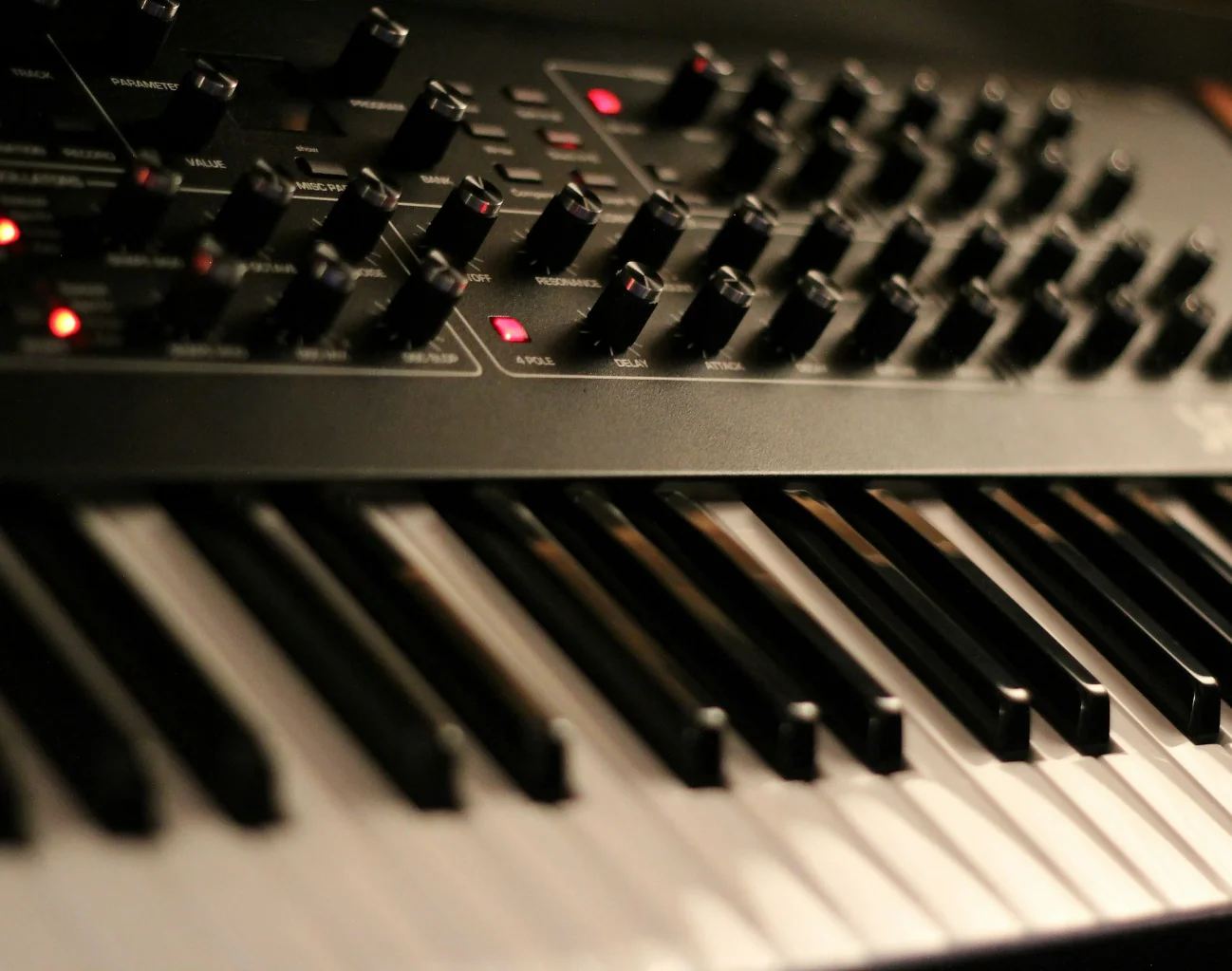
The Sub 37 provides a low-pass ladder filter with selectable slopes, which determine how strongly higher frequencies diminish above the cutoff. In Moog’s manual, the shallower slope choices are 6 or 12 dB per octave. For a steeper slope, select 18 or 24 dB per octave. Filter slope and cutoff deserve separate auditions since they affect the sound in different ways.
On the Prophet-6, each voice includes a low-pass filter and a high-pass filter that operate within the analog signal path. If the high-pass cutoff rises, low-frequency material diminishes, which is useful to assess when a chord part shares the arrangement with bass. Over a sustained phrase, gradual cutoff movement changes the tone as the notes continue. Record the movement against the accompaniment to judge its timing within the song.
Record Audio Alongside the MIDI Performance

Both manufacturers’ manuals describe USB as a MIDI connection, so recording the instruments’ sound requires an audio connection to an appropriate interface input. MIDI carries performance information such as notes and parameter changes. To record the sound itself, route the synth’s audio output to the audio track through the interface. For a repeatable session, keep the MIDI performance alongside a recording of the selected sound.
Moog’s Sub 37 has a mono audio output, whereas the Prophet-6 offers stereo outputs and a selectable mono mode described in its operation manual. For a Prophet-6 sound with stereo effects, record both outputs to retain the stereo result for the mix. Its onboard effects are digital, with a bypass option for the analog signal path. Confirm the desired effects treatment during the recording setup.
Mystic Family’s recording studio service lists an Apollo x8 interface, and the engineer can discuss suitable inputs for the planned synthesizer session. Audio levels need checking during the loudest passage, with a sufficient level margin for performance changes. Filter adjustments may alter the level reaching the recorder. Playback of a short test take lets the engineer check the result ahead of the full performance.
Retain the Sound and the Performance Decisions
After a useful take, save the instrument’s patch and record its name in the session so later work starts from the intended sound. Retain an audio take prior to substantial patch changes. MIDI playback requires the corresponding instrument setup, and a saved audio file preserves the recorded result. For a revised take, document the changed parameter alongside the new file’s name.
The producer’s session notes should identify the chosen output arrangement and any processing applied during recording, especially when another engineer will complete the mix. Agree on a common start position for exported parts so the bass and chords return to their intended positions in the project. If stereo effects are central to a phrase, include that decision in the handoff notes.
Plan a Synthesizer Session at Studio 260
Artists approaching Mystic Family’s audio production service can share the current arrangement and describe the synthesizer part they want to develop during the session. Discuss the preferred instrument with the team, then confirm availability for the proposed date. Preparation should include the track’s tempo and a reference passage that explains the intended sound.